Away with the ferries…
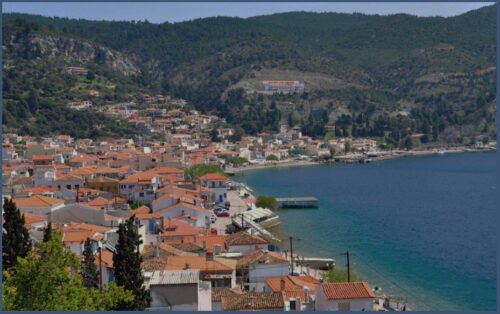
A three-day coach ride from London to Greece, crossing many countries including the former Yugoslavia and arriving at the lovely seaside village of Limni on the island of Evia.
We left London Victoria Bus Station early in the morning. The coach was full. Students, tourists, adventurers, families with children. Nikos and Papi sat together across the aisle from me. Next to me, an elderly Greek woman travelling to Athens to meet her newest grandchild. All three of us fell asleep well before we cleared London outskirts. The night before we had had a Lebanese meal washed down with lots of wine and finished with Metaxa, the Greek brandy.
When we opened our eyes, we were boarding a ferry in Dover en route for Boulogne. During the Channel crossing, as we stretched our legs on deck, Nikos and I remembered our sailing days on M.V. Chaton, its demise in the Bay of Biscay, the sad loss of three sailors and his own lucky escape after nine hours in the sea.
My second time on French soil was a blur. The coach made a couple of stops. We got off for long enough to take the air, buy a coffee and visit the archaic French services toilets. I am glad to say they have improved no end since then. While Nikos and Papi munched on their bland sandwiches, the Greek woman I was sat next to, kept feeding me with all sorts of delicious Greek delicacies. I think she had brought most of her larder. Among other things, the cheese and spinach pasties were delightful.
The Mont Blanc tunnel took us across into a very warm northern Italy. The coach stopped at the beautiful city of Bologna where we enjoyed a real lasagne and the tiniest espresso coffee. We ambled round the large piazzas and the arched pavements taking in the sights and smells of Italy’s culinary capital. A few travellers got off and others joined the trip. A fresh driver took the wheel and the coach resumed the journey.
We crossed into the former Yugoslavia. Tito’s stern-looking customs officers checked our passports very closely at the border. Despite the blue skies, the country looked gloomily grey. In the scenic countryside, there were a few detached houses well looked after and cared for but on the outskirts of the towns we passed, there were rows upon rows of grey blocks of flats. Little did we know then, that many of them would be turned to rubble in the early nineties during the war between Croats, Serbs and Bosnians.

By the time the coach dropped us off in the seaside village of Arkitsa well after eleven in the evening, we had missed the last ferry to the island of Evia and run out of money. Nikos approached a gregarious taverna owner and explained that we had missed the boat and we needed to reach Limni. He cheerfully seated us on a terrace busy with tourists, fed and wined us graciously on the house. Nikos explained that the man had contacted a taxi driver who would take us all the way to Limni across an old bridge which joins Evia with the Greek mainland in the town of Khalkis.
We arrived at Nikos’s house in the middle of the night. His mother and sister greeted us and showed us to our room where we crashed on the beds exhausted after three days on the road.